Category Archives: Breakfast

Steel Cut Oats with Cinnamon, Dates and Sheep’s Milk Yogurt

It’s healthy, it’s delicious, and with the littlest bit of planning, it can be made conveniently enough for the busiest lifestyle. I know, because I live that lifestyle. And until now, breakfast was a coffee and a muffin from the truck on the way to work. No longer.

Once or twice a week, here’s what I do – while we’re cleaning up the dinner dishes, I start the oatmeal cooking. When it’s done, I take the pot off the stove and put it in the fridge. In the morning I will take out a quarter of the original batch, put it in a glass jar and heat it in the microwave. (I’m avoiding plastic when I can.) I then take the jar and put in in a bag with a small container of yogurt, a bowl and a spoon. On the way to work, I stop for coffee at the truck, and by the time I reach my desk, the oatmeal is still warm (I only love 5 blocks from work). I spoon the oatmeal into the bowl with the yogurt, and sink into my morning heaven. If I’ve gotten to bed early, I’ve also gotten up early, and beaten my first patient to the office by at least a half hour, so I can take my time and really enjoy it. If not, I just start in on office hours, nursing my oatmeal between patients throughout the morning. Either way, I’m happy.

My long term goal it to get up really early and exercise, and to eat before I get to work, but for now, this is working for me. And its a heck of a lot healthier than a muffin.

Sheep’s milk Yogurt?… Really?

OMG once you’ve tasted it, you’ll never go back to the cow. It’s got a tangy freshness that is just so special.

From a health perspective, sheep milk has a higher calcium and  nutritional content than cows milk, and while it also has more fat, 25% of that fat is medium chain triglycerides, which may benefit weight loss. Plus I find it that much more satisfying than low fat yogurt, so I only need a few ounces to feel satisfied. With Old Chatham brand, the one I’m using now, you can skim the cream off the top for a lighter fat version.

Sheep’s milk is also rich in omega-3 fatty acids and linoleic acid, and may have favorable effects on cholesterol and heart disease risk. In one study, switching from cow to sheep’s milk lowered total cholesterol among folks who ate a dairy-rich diet.  In another, sheep’s milk cheese consumption led to favorable changes in inflammatory and atherogenic markers.

The best tasting brand I’ve eaten so far is from Bellwether Farms in California (maybe because it was my first…), but the yogurt from Three Corner Field Farm is a very close second. Old Chatham makes a sheep yogurt that is more akin to the greek yogurt, and has wonderful flavors like maple and ginger.

Oatmeal with dates, Cinnamon & Sheep’s Milk Yogurt

This batch will make 4 servings. Bob’s Red Mill oats, which I am using now, calls for 3 cups of water to 1 cup of oats and a 20 minute cook time, but I’m happier with 3 1/2 cups water and a longer cooking time. You should experiment with the brand you use to find the amount of liquid and the cook that works best for you. I also like Whole Foods 365 and Trader Joes Brands. Dates have the wonderful quality of melting into the oatmeal as it cooks, dispersing their sweetness throughout, obviating the need for maple syrup or brown sugar, and, along with the cinnamon, giving it a wonderfully nutty brown color.

  • 1 cup Steel Cut Oats
  • 3 1/2 cups water
  • 1/4 tsp kosher salt
  • 1 cinnamon stick
  • 12 dates (Medjool if you can find them) pitted and cut into small pieces
  • 2- 6 oz containers of sheep’s milk yogurt (you’ll eat 3 oz each day)

Combine water, salt, oatmeal, cinnamon stick and chopped dates in a medium saucepan. Bring to a boil over medium heat. Lower heat as far as possible, cover and cook 30 minutes, stirring several times to keep it from sticking, and removing the lid for the last 10 minutes if it seems too liquidy.  Remove from heat, remove cinnamon stick, cool and store in fridge. To serve, remove 1/4 of the oatmeal, reheat for 1-2 mins in microwave. Serve with a side of sheep’s milk yogurt. Enjoy!

Nutritional info (calculated at Caloriecount.com)

More Make-Ahead Steel-Cut Oats Recipes from Around the Web

  • Pinch My Salt uses McCann’s, makes 8 servings at a time and refrigerates each serving separately in small containers
  • Mark Bittman cuts morning cooking time to 7-10 mins by making Overnight Steel Cut Oats (and tops w/ almonds and dried cranberries)
  • The Novice Chef tries her hand at overnight oats
  • Two Peas and  a Pod top their oatmeal with brown sugar and then torch it, creme brulee style. Definitely a weekend recipe.
  • Ohsheglows makes hers ahead, and has 5 different recipes on her blog, some using almond milk
  • Side of Sneakers makes her overnight in a crock pot and also uses almond milk
  • Apartment therapy uses little jars like mine.

Do you have a favorite steel cut oats recipe?

Tips for steel cut make-ahead success? A favorite brand of sheeps milk yogurt? Feel free to post it in the comments section below.


Gas House Eggs

Gas House Eggs were a real favorite in my family while growing up. Eggs fried in a nest that you make by punching a hole in a slice of bread. The name is a common American mispronounciation of the term “Gasthaus”, but apparently these eggs are known by a dozen or more different names around the world

The best part of this breakfast is the small bread round that you cook alongside the egg. In my family, we called that part the “Ding-Ding”. That’s because we kids thought it looked like the Holy Host, and “Ding! Ding!” was the sound of the bells that rang whenever the priest raised the host for us to see during Mass. My kids have never been to a Mass, but they still call it a Ding-Ding.

Gas House Eggs

For each serving, you will need –

1 egg
1 slice bread (I used country white, but it’s just as good with whole wheat)
Butter or olive oil (I use olive oil these days, but butter tastes great…)
Salt and pepper to taste

Using a shot glass (who has shot glasses anymore?) or small jar top, punch out a hole in the center of each slice of bread.

Heat oil or melt butter in fry pan. Add bread to pan. Break the egg into the hole.

Add the Ding Ding to cook alongside the egg, flipping it halfway through so both side get nice and browned. Cover and cook till egg is cooked and bottom of bread is browned and crisp. (Flip the egg for once over If you like the yolk a bit more cooked.) Salt and pepper to taste. Serve hot.

If you cooked your gas house egg just right, the bottom will look something like this -

Call it what you like, I call it delicious!
___________________________________________________
More Reading on Gas House Eggs

Family Brunch – Jewish Style

It’s a meal I never get tired of – the fish brunch. It’s the family meal you have when everyone gets together on a weekend morning, either for Mother’s Day (like today) or someone’s birthday, or just because you’re all in the same place at the same time.

I suppose every Jewish family has their version of the fish brunch, and this is Mr TBTAM’s family’s -

  • Nova (that’s the good lox)
  • Sable (if you’re lucky)
  • Whitefish salad
  • Creamed herring with onions (and/or chopped herring)
  • Cream cheese (plain or with chives, sometimes both)
  • Bagel (like fish, the plural is the same as the singular, and sometimes preceded by the word “the”)
  • Sliced tomato and onion
  • Kugel (homemade only)
  • Olives
  • Sometimes blintzes instead of kugel, but usually just kugel
  • Lots of coffee and orange juice.

In the past few years, we’ve added an amazing item to the meal – lobster salad from Sable’s. Of course, it’s not Kosher, but neither is Mr TBTAM’s family. And I’m telling you, the stuff is like heroin…

Today we also had Nancy’s homemade yogurt (excellent with the kugel) and ginger cake with whipped cream for her birthday. If it’s one of the kid’s birthdays, it’ll be the chocolate chip cake. And if it’s Mr TBTAM’s birthday weekend, they’ll be a sour cream coffee cake instead of the Kugel.  (One of these days I’ll have to post that sour cream coffee cake recipe…) A little fresh fruit is nice too.

How to make a fish brunch

You’ll need a supplier of fine fish. Sable’s and Russ & Daughter are our faves, but if we lived on the Upper West Side, it’d be Zabar’s or Barney Greengrass. If you’re in Philly, head to Abe’s & Sons. (Irene – feel free to add more recommendations in the comments.) If you decide to branch out and experiment with a new fish supplier, be prepared to discuss the relative merits of their whitefish salad compared to others you have known.

You’ll also need great bagels. For us, that’s H&H or Hot&Fresh Bagels or better yet, have Irene bring them up from Rolings Bakery in Philly. But bagels are a very personal thing, and you should buy the ones you love the best.

Finally, you’ll want to have a knock-’em dead recipe for Kugel. Make it that morning so it’ll still be warm when you serve it.

Serving the fish brunch

You’ll be serving everything except the dessert cake family style. Arrange the sliced Nova and sable nicely on a big platter. Warm the bagel in the oven and slice before serving them up in a big bowl. Cut the kugel into little squares and serve on a pretty plate. Serve the whitefish and lobster salads, herring and cream cheese in their plastic containers. (If it’s a special occasion, you can serve them in nice little bowls, but don’t get too carried away.) Bring out the coffee pot and OJ and call everyone to the table to eat.

Take your time eating, and be prepared to be asked repeatedly to pass something or other. Save some lobster salad for someone else.

Serve the birthday or coffee cake after you’ve finished eating, cleared the table and sat around drinking coffee for awhile. You’ll slice the cake up and serve everyone on a nice little plate. Have some more coffee

After the fish brunch

Clean up is easy. Put your dirty dishes in the dishwasher, wrap the fish well and distribute leftovers if anyone is heading out. If you’re still staying together for the afternoon, plan something nice to do together.

But don’t stray too far from a fresh water supply – you’ll be thirsty.

High Protein Carrot Muffins

I’m still searching, baking and tweaking, looking for that perfect Zone diet muffin recipe. Along the way, I’m having fun making and eating some delicious muffins.

While this muffin isn’t quite in the Zone (40% CHO, 30% Protein and 30% Fat), it is very high in protein and made with healthy fat. If you have it with a bit of low fat protein on the side, you’re getting pretty darned close to a perfect Zone breakfast.

These muffins are a variation on a recipe I found at a great little blog called The Food I Cook. I encourage you to read Chris’s original recipe for a great discussion of the ingredients and, if you prefer to use Splenda and can take the higher flax content, you can try his recipe instead.

This recipe makes a nice big batch o’ muffins. They freeze well, and I have been taking one to work every morning for breakfast for the past 2 weeks. With a cup of coffee and a slice of non fat cheese or a half cup of yogurt, they hold me quite nicely till late lunchtime.

High Protein Carrot Muffins

I’ve listed specific brands in this recipe, not because I am endorsing them, but because my calorie count and nutritional analysis are specific for these brands. Protein powder brands vary a lot in protein and fat content, so read the label before you buy. The one I used has no fat.

As I’ve posted before, the key to great muffins is not over-mixing, so get your wet and dry ingredients all ready before incorporating them in as few strokes as possible before adding the carrots and such.

If you are going for an even lower fat content, use skim milk instead of low fat buttermilk and cut out half the oil and the nuts. If you use skim milk, change the leavening to 4 tsp baking powder and 2 tsp baking soda.

Dry Ingredients
1 cup Stone Ground Whole Wheat Flour
1 cup Spelt flour
1/2 cup Arrowhead Mill Soy Flour
1/2 cup Bob’s Mills Flax Seed Meal
1/2 cup Quaker Old fashioned rolled oats, dry
1/4 cup Brown Sugar
2 tsp vanilla extract
1/2 tsp ground cloves
1 tsp nutmeg
2 tbsp finely chopped crystallized ginger
2 tsp cinnamon
1 tsp salt
5 tsp baking soda

The Good Stuff
2 large granny smith apples
2 cups (just under 1 pound) Shredded Carrots
1/4 cup raisins

1/3 cup ground almonds

Wet Ingredients
2 cups low fat buttermilk
1 cup Jay Robb Whey Protein
4 large Egg Whites (1/2 cup)
2 tbsp olive oil
¼ cup orange juice

Preheat oven to 350 degrees Fahrenheit. Very lightly grease non-stick muffin tins using a very little olive oil.

Whisk dry ingredients together is a large bowl. Set aside.

Peel and core apples and shred using food processor. Set aside in a medium size bowl. Peel carrots and shred using food processor. Add to apples in bowl along with the raisins and ground almonds. Combine them well so they are all distributed evenly in the mix.

Pour buttermilk into a medium size bowl. Whisk in protein powder until well dissolved. Add egg whites, olive oil and orange juice and whisk till foamy.

Add wet ingredients to dry, stirring just enough to incorporate the dry ingredients. DO NOT OVER MIX. Fold in the apple/carrot/raisin/nut mix in as few folds as possible.

Fill muffin tins almost to the top. Bake for 20-25 minutes till done. Let cool a bit in the muffin tin, loosen edges gently and turn out onto a plate to finish cooling.

Flash freeze muffins as soon as they are cool. Pop into the microwave for about 30 seconds to thaw before eating.

Nutrition analysis provided by CalorieCountAbout.com

The nutritional analysis above is for the entire recipe – divide it by the number of muffins you make for the per muffin data. You’ll get between 18-24 muffins with this recipe, depending on how full you make the muffin cups. That’s 130 -170 calories per muffin, with 7.5-10 grams of protein in each. (For you folks on weight watchers, it’s about 3 points for a muffin.)

In Search of An Amazing Protein Muffin

I don’t know about you, but I love muffins. The problem is, despite healthy names like “Banana Nut” and Bran Raisin”, muffins are really just cupcakes without the icing. Definitely a no-no if you’re trying to lose weight like I am.

So imagine my delight to find that on my food delivery diet I get muffins! Not just healthy muffins but amazingly delicious muffins! Usually served with sausages or some non-fat ricotta, they are so satisfying that they hold me almost all the way to mid-afternoon.

I’ve been unable to find the recipe for these muffins anywhere. The closest I’ve come is this video of Chef Adriano, the guy who creates the meals I eat, making muffins for a TV show. Unfortunately, he doesn’t give the whole recipe. So I’ve scoured the web for protein muffin recipes, most of which can be found on weight lifting websites and discussion boards. I’ve tried a number of these muffins, and while I’m sure they are healthy and making big men even bigger, they taste like cardboard.

So I’ve made it my mission to create a protein muffin that is worth the trouble of baking. It has to be healthy and fit the protein, fat and carb targets of a Zone diet (that’s the diet I am on.) And it has to be tender and taste GREAT.

A Basic Muffin Recipe

Our quest for an amazing protein muffin starts with a basic muffin recipe. It has to be a really good basic recipe. For that, we turn to our bible, the Joy of Cooking (1975 edition).

Sift together into a large bowl:
1 3/4 cups flour
1/4 cup sugar
3/4 tsp salt
2 tsp double acting baking powder

In a medium bowl, beat
2 eggs
Add to the eggs
2-4 tbsp melted butter
3/4 cup mik

Combine the liquid and dry ingredients with a few swift strokes. Fill well-greased muffin tins two-thirds full and bake 20-25 mins at 400 degrees fahrenheit.

A Little Muffin Chemistry

Before we make any changes to the ingredients of this recipe, we’d better know a bit about them.
Basically, muffin ingredients fall into one of several categories:

1. Leavening agent – That’s easy. Baking powder (and less so, eggs)
2. Gluten formers – flour, egg whites, liquid
3. Gluten preventers (tenderizers) – egg yolks, sugar, butter
4. Flavor additions – salt, blueberries or chocolate chips or whatever you’re using to flavor your muffins.

Adding liquid to flour leads to the formation of gluten. Gluten forms the latticework that holds the air, allowing baked goods to stay risen once they rise. But too much gluten formation leads to a very tough final product. In muffins, this looks like this (lots of big air pockets) -

To prevent over-glutenizing your muffins, it’s critical NOT to beat the batter much. Beating combines causes more and more of the flour to come into contact with the liquid,leading to more and more gluten formation. So 5-10 strokes at most, and don’t worry about the small lumps of flour.
Because fat and sugar in muffins prevent gluten formation, the price you can pay for lowering the fat and sugar content is a dry and tough muffin. We want to avoid that – because let’s face it – if you have to slabber your muffin with butter to make it edible, you’ve just lost the benefit of lowering the fat.

Of course, we will need a leavening agent for out muffins. We’ll be using baking powder in our muffins. (You can use baking soda if you are adding acidic ingredients like buttermilk or lemon to you muffins.) Keep in mind that if any of the changes we make lead to a heavier muffin we might want to increase the leavening a bit to make sure we get a good rise. But too much leavening and you get an overly exuberant but unstable rise that is destined to fall once it leaves the oven. 1-2 tsp baking powder per cup of flour is about right.

Finally, there’s temperature. It seems to range from 350-425 degrees fahrenheit, with most recipes using 350 degrees. Higher temperaturs lead to a quicker rise, but risk overcooking the outside and undercooking the inside.

Now that we are experts in the chemistry of muffin making, it’s time to see if it’s really possible to make a healthier muffin that is actually edible. But first, a little muffin video break -

You’ll eat a healthy muffin and you’ll like it!!!
Making a Healthier Muffin

Okay, let’s see what we can do to the original recipe to make it better for us.

Protein

We clearly have to have a higher protein content for our healthy muffins. In this case, we will use protein powder, and add it to the milk. Be careful – some protein powders have significant fat content. I found one with no fat, and that’s what I’m using. We’ll also use egg whites instead of whole eggs, matching volume for volume, which will boost the protein content and lower the fat at the same time.

Fat

We’ve already lost fat by substituting egg whites for whole eggs. We’re also going to use skim milk and remove the butter from our original muffin recipe. This is risking a very tough final product. So we’ll try some other tricks for getting the fat back in a more healthy way. (See Flour, below.) If this does not work, in the future we can consider keeping the fat, but substituting a healthy fat like canola or olive oil for the melted butter.

Flour

Here’s where the going gets tough, and the muffins get tougher.

The first thing you think of when you think of healthy baked goods is whole wheat flour, right? That was my first thought, too, and so the first healthy muffins I tried to make used half whole wheat and half regular flour. Disaster. Why? High gluten combined with low fat = cardboard. If you’re going to use whole wheat flour, you’ll need to increase either the fat or the sugar content to limit the gluten formation. Sorry. I”m not sure. (Turns out whole wheat flour does not have higher gluten than regular flour. It is heavier, though…

Since low fat is more important to me right now, I’m going to have to sacrifice the high fiber. In the future, we could consider an alternate healthy muffin with high fiber and good fats like canola or olive oil. But for now, let’s stay on the low-fat track.

If we’re going to lower the fat, we’d better lower the gluten content of our flour. One simple way is to use cake flour (6-8% gluten forming protein) instead of regular flour (8-10% protein). We can also subtsitute rice flour for part of the flour. Rice flour is gluten-free. The problem with it is that it does not hold up as well, so you can’t use it exclusively unless you are willing to add a stabilizing agent such as guar gum to maintain the rise. Luckily, we won’t need to go that far. We’ll keep the rice flour to 50% of our flour mixture and get our gluten from cake flour.

I’m also going to add some soy flour. This will also add protein and a bit of the healthy fat I’m looking for. Joy of Cooking tells me to treat soy flour like fat and add it to the liquid ingredients, so we’ll be dissolving it in the milk along with the protein powder. We’ll also need to lower our baking temp by 25 degrees since soy flour can cause our crust to burn more easily.

Finally, in an attempt to get a little more fiber, I’m going to add some flaxmeal.

Leavening

I’m increasing the baking powder a bit to compensate for an additonal 1/4 cup flour and the slightly heavier flaxmeal.

Sugar

We can’t have none, can we? (And I refuse to use artificial sweeteners in my baking.) So we’ll just change it to brown sugar, okay? Maybe next time we can try some agave nectar instead.

Additions

I’ve added chopped apples to these muffins, but other combos I’d like to try in the near future are coconut-macadamia, banana walnut and carrot-raisin. If course, each of these additions will change the liquid content, and we’ll need to tweak the basic recipe even more. So for now, I’m staying simple additions like apples and blueberries till I get this version down pat.

So with all this in mind, let’s see what I came up with…

Drum Roll, please…

Ladies and gents, without further ado, I present my first fairly-successful attempt at a healthy muffin that ‘s worth eating. If you have one of these muffins for breakfast with 1/4 cup low fat ricotta cheese you’ll be getting about 60% carb, 11% fat and 20% protein. It’s not perfect, but it’s a start. Still too heavy on the carbs, although I’ve gotten the fat content down fairly nicely.

Next time I plan to try cutting back on the rice flour (which is very high in carbs) rather than the cake flour. There’s also a little room for some fat, so I’ll try adding some canola oil. I’m going to measure my flour my weight to be sure I’m not using too much. I’ll increase the temp a tad since I didn’t even come close to burning these babies. So stay tuned – this is a work in progress. I’m open to any and all suggestions.

Relatively Healthy Apple Protein Muffins

The recipe that follows is a pretty-good tasting healthy muffin with a not-bad texture. Like all muffins, these are best eaten warm, with a little all fruit jam or some low fat riccotta. I made both regular and mini muffins, and have to say that the mini-muffins almost stole my heart, at least while they were warm.

1/2 cup cake flour
1/4 cup flaxseed meal
1 cup white rice flour
1 tsp salt
3 tsp baking powder
1/4 cup brown sugar
6 egg whites
3/4 cup skim milk
1 scoop vanilla protein powder
1/4 cup soy flour
1/2 cup finely chopped apple

Preheat oven to 350 degrees fahrenheit. Grease muffin tin lightly with canola oil.

Sift dry ingredients together in a marge bowl. Toss in the chopped apple.

Pour milk into a medium bowl and whish in the protein powder and soy flour, being sure to dissolve it well. Beat the egg whites lightly in another bowl and add to the milk mixture.

Pour the liquid mixture into the dry ingredients and mix with a wooden spoon just enough to combine. (No more than 5-10 strokes). Fill muffin tins 3/4 full. Bake for 20-25 mins. Let sit a few minutes before removing from the muffin tin. Eat warm.

Makes 12 large muffins or a whole lotta’ mini muffins.

Nutritional info per large muffin – Calories 115; 21% protein (7 grams); 11% fat ( about 1.5 grams); 75% carbs (22 grams).
__________________________________________________

References

The ABCs of Baking
How Baking Works
The Joy of Baking
The Art of Low Fat Baking

Pretty Near Perfect Popovers

I figured that if I was going to criticize the popovers at Popover Cafe, I’d better be able to make a pretty darned perfect one myself.

Given that I’d never done it before, I was a little nervous, so I scoured the web for recipes and advice before starting. And thanks to the Joy of Cooking, Mark Bittman, Ina Garten and all the great food bloggers out there who have preceded me on this adventure (see links at the end of this post), my popovers turned out to be pretty near perfect, and to my mouth, at least, much tastier than the ones at Popover’s Cafe.

Pretty Near Perfect Popovers

1 cup flour
1/2 tsp salt
1 cup whole milk (I used lowfat mixed with a little half and half)
2 large eggs
1 tbsp melted butter, plus another tbsp to grease the pan
A little flour or sugar to dust the pan

Preheat oven to 450 degrees Fahrenheit. Heat popover pan on a baking sheet in the oven for 5 minutes or so while combining the ingredients.

Make sure the milk, eggs and butter are at 70 degrees. (I heated the milk in the microwave then cooled in to around 70 or so degrees Fahrenheit).

Whisk flour and salt together in a bowl.

Whisk milk, butter and eggs together in a larger bowl.


Add flour to wet ingredients, whisking just enough to combine. It should be thin like cream and small lumps are okay.


Take popover pan out of oven and brush inside of cups with melter butter. Sprinkle a little sugar or flour on the cup inside walls. Pour in batter to 3/4 full. Place in oven so that the tops of the popovers will end up in the middle of the oven (My gas oven has the heat on the bottom).

Bake at 450 for 20 minutes. Do not open the oven door to peek (But if you have a glass door and a light, do look through the window and watch them pop!)

After 15 minutes, lower heat to 350 and bake another 20 minutes. Remember, no peeking except through the glass!

Remove from oven and immediately from pan. Insert a sharp knife into popover to let the steam escape (And don’t worry – if they are done, they won’t collapse).

Serve warm with butter and jam.

Popover Thoughts and Questions

1. Should my popovers have popped a bit more? The little dent in the middle makes me think so, but my god, they were delicious!

2. I think may have over-filled the cups, since I ran out of batter before the last cup. That may be why I didn’t get that last “pop” on my popovers.

3. Does the manner of combination of ingredients matter? For instance, Joy of Cooking has you combine everything but the eggs and then beat in the eggs. Another recipe has you beating the eggs first till they are a light color and then adding the milk and melted butter. I wonder if it makes a difference…

4. I’ve read that sifting the flour makes for a better pop. Some recipes call for bread flour instead of all purpose. (Don’t use cake flour, though – it won’t make enough strong gluten to keep the popover risen.)

5. Most commercial popover recipes (Such as those from Jordon Pond Restaurant and Nieman Marcus) rely on baking powder, probably so they have a guaranteed pop. I think that’s contrary to the magic of popovers – the fact that they rise without leavening. The rise comes from the steam produced by the high proportion of liquid ingredients in the batter, supported by a sidewall strengthened by gluten.

6. This recipe from Apartment Therapy uses 1/4 cup more milk than mine, and what a gorgeous pop they got! It makes sense that more liquid might just help. So next time I will be sifting the flour, filling the cups only a little more than halfway and using a bit more milk (whole milk this time). Will post the results.

Popover Links

  • The Perfect Popover by Lynn Bonnett – Everything you need to know is here.
  • Joy of Baking – This apple popover looks delish!
  • Christy at All Recipes – Nice photos and great comments
  • Chowhound – Nice discussion on technique in the comments section
  • One More Moore — Another blogger inspired by Popovers Restaurant. Gorgeous popovers!
  • Popover Science – Answered a lot of my questions.
  • Popover variations – Try Lemon-Scented, Cheese, and Gluten-free.
  • Michael Pollen uses whole wheat + white flour, and still gets a pop.
  • Obama is like a popover. Discuss.

    Of course, since this is an election year, I can’t ignore this post from Valentine Bonnaire comparing Obama to a Popover…

    That thin crispy shell on the outside and nothing but a cavern of hot air inside. Popovers — another example of something with all of the audacity of nothingness. They taste good while you are consuming them, but there just isn’t a whole lot there is there?

    I beg to differ. A popover is not a lot of nothingness – it has lots and lots of delicious flavor. And if Obama is like a popover, well, then it’s because he is taking politics to a higher level. A popover has to have a strong crust to hold itself up there, and he’s got that. And if he needs a little butter and jam to make him perfect, well that’s just fine with me. We’ve got plenty of that.

    The Perfect Scone Song


    It’s moist and crumbly, it’s delicious, it’s delighful! It’s a recipe so special that it inspired a new musical sensation, and it’s my New Year’s gift to you, Dear Readers…

    And so, without further ado, ladies and gentlemen, allow me to present – The Perfect Scone!

    This recipe is the culmination of a year long search for that elusive pastry, and was well worth the journey. I want to thank those who commented on my previous scone posts, especially Waynetta, Chairwoman, Katy, and Laura, all of whom shared their recipes and suggestions. I consider this recipe to be a group effort. In the end, the recipe I created was closest to that of my sister, the OBS Housekeeper, without whose nagging I would never have finally finished this culinary journey. OBS, we tried your recipe and even taste-tested it with Irene, who gave it the thumbs up. In the end, though, I went for an ever so-slightly different recipe containing butter instead of Crisco.

    Here is what I learned about scones along the way:

    1.The British scone is more akin to an American biscuit, and the American scone is more like the Irish scone. I have been looking for the perfect British scone.

    2. Most scone recipes do not have enough liquid, and are too dry for my taste. Perhaps this is where the clotted cream comes in…

    3. Technique is paramount. Work quickly once the liquid is added. A soft shaggy mass is what you are aiming for. Just fold it once or twice, pat it down and cut out your scones. Don’t mess too much.

    4. Use only double-acting, aluminum-free baking powder. Here in the US, that is Rumford Baking Powder. (Thanks OBS for this tip.) Or, do as Cooks Illustrated does, and make your own baking powder (1/4 baking soda, 1/4 tsp salt and 1/2 tsp cream of tarter make 1 tsp baking powder.)

    5. I really love scones!

    The Perfect Scone

    2 C flour
    1 tsp. salt
    1/4 cup sugar
    2 1/2 tsp. baking powder (Aluminum-free)
    6 tbsp butter, cold, cut into pieces
    1 C heavy cream, half & half or a combination
    ½ C chocolate chips, raisins or other small dried fruit bits

    A bit of milk in a small bowl
    Sugar

    Preheat oven to 400 degrees Fahrneheit.

    Mix together flour, salt, sugar and baking powder. Cut in butter using pastry cutter till it is the consistency of coarse corn meal. Add chocolate chips and mix until they are coated.

    Make a well in the center, and pour in cream. Mix with a wooden spoon just enough to get all the dry ingredients incorporated. Dump the dough onto a table. (It should be a shaggy soft mass.) Fold the dough once or twice, then pat the dough into a circle ½ inch high. Cut with a biscuit cutter. (Size of cutter depends on if you like little or bigger scones. Standard size is 2 inches)

    Place scones on an ungreased baking sheet. Brush the tops with a bit of milk and sprinkle with sugar. Bake for 12 to 15 minutes.

    Makes 8-10 scones.

    Category: Food

    The Perfect Scone? Sorry Delia, not quite…

    In our first attempt at making the perfect scone, my daughter Natalie and I made some pretty tasty scones, but the texture was not as light as we’d hoped. We tried Ina Garten’s scones next, and came up with a lighter scone that seemed a bit dry.

    Thanks to my reader’s comments and a little research, I’ve figured out that the scone I am looking for must be an English scone, which it seems, is more akin what we Americans would call a biscuit. Given that the first scone I’d ever had was in Bath, England, that made sense to me.

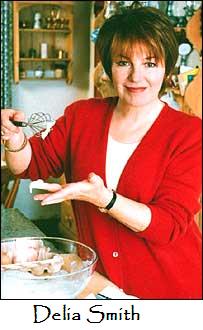
    So last weekend, at the suggestion of both Waynetta and Chairwoman, I finally tried Delia Smith’s Scone Recipe (complete with photos, here). Delia is sort of the Julia Child of Britian, a TV chef who made cooking seem simple, and whose recipes are known to be tried and true. (You can read her BBC bio here). I figured that if Delia didn’t have the right British scone recipe for me, no one would.

    The first thing I noticed about Delia’s recipe was that she recommends the butter be at room temperature, which goes agains everything I’ve come to learn about making pastry, and is the exact opposite of the recommendation in my Professional Chef, namely, to put the butter back in the fridge after cutting it up to be sure it stays cold until the very last minute. This was my first inkling that perhaps Delia’s recipe would not be the best…

    I decided to stick with the Professional Chef, and kept my butter cold. Otherwise I followed Delia’s recipe exactly, even using castor sugar and a round biscuit cutter (except I added chocolate chips).

    The first batch was made with daughter and her friend. The kids took a little longer than I wanted working the dough, and it really became too cookie like. So I made a second batch myself, working like lightening to keep the dough light. Mine is on the left up there, and the kid’s scone is on the right.

    They look great, and the flavor was great. But you know what? The scones were too dry. I know scones are meant to be eaten with clotted cream or jam, but still I was disappointed. I think the recipe I seek has a bit more liquid than Delia’s. In fact, when I look at biscuit recipes, they definitely have more liquid.

    So it’s back to the drawing board. Next up, I think I will try the Cook’s Illustrated scone recipe. If anyone knows where I can find it, do let me know.

    Of course, it may be that what I am looking for is not a scone, and perhaps doesn’t even exist. But I have this memory of a warm, light, not dry scone with clotted cream sometime in my culinary past (perhaps in Bath?), and I’m determined to make it…

    Addendum: I Found it! The Pefect Scone.

    Category: Food

    Still Searching for Perfect Scone

    Hi, I am Natalie, the daughter of the author of this blog. My mother has talked about me, I am the one who is always helping her find the best recipe for scones. Today I went out at 11:00 to our local supermarket to buy all the ingrediants for our new “kitchen adventure”. My mother was getting familar with the recipe. My father is usually the one to go out and buy all of our things but at that moment he wasn’t available to.

    We got the recipe from the cookbook The Barefoot Contessa by Ina Garten. We don’t mean to upset the master but the final outcome of the goods were not as good as we would have hoped. They were the lightest ones we made so far. But they were a bit dry. This may have not been Ina’s fault as we put in a bit too much salt by accident, but our question is, how could salt make something dry? But don’t go swearing Ms. Garten because we also cut the recipe in half and that doesn’t always work when you’re baking compared to cooking. I doubt that Ina would ever read this but if you googled yourself or something, hi. We are trying to find a way to write to you asking for a recommendation of what we could do in order to make this recipe work for less scones or less dry scones.

    This has been blogging with Natalie on The Blog That Ate Manhatten. I may be back. Here are some pictures of the final turnout. Talk to ya later!

    Next: The Perfect Scone? Sorry Delia, not quite…

    Category: Food

    In Search of the Perfect Scone

    Perfect scone update – I found it!

    Chocolate chip scones have pretty much replaced chocolate chip cookies as the thing my daughter Natalie and I bake together. This is a good thing, I believe, for several reasons. First, less sugar and fat. Second, much quicker and an easier clean up. Third, only one baking time, as opposed to cookies where it’s in and out, in and out, onto the cooling racks, and then we tend to burn half of them because we lose track of the time. Finally, we love to drink tea, and scones are pretty much perfect with tea, although they also pair quite nicely with a tall glass of cold milk.

    Still, I am not entirely happy. For, although I have tried at least four different recipes, I have yet to make the perfect chocolate chip scone.

    Last Saturday, because Irene and Marvin left behind some buttermilk on their recent visit, Natalie and I decided to try buttermilk scones. Here’s the recipe we used, barely modified from a very nice web site called Baking Sheet. The scones in the picture looked pretty perfect to me, and I liked that the recipe only makes 4-6 small scones. Although they apparently freeze well, scones are best eaten the day they are made, so a smaller quantity seemed better to me.

    Buttermilk Scones
    1 cup flour
    1 tsp baking powder
    ¼ tsp baking soda
    1/8 tsp salt
    2 tbsp sugar
    3 tbsp butter, cold and cut into small pieces
    5 tbsp buttermilk
    1 tsp vanilla
    1/4 cup chocolate chips

    For topping:
    1 tbsp buttermilk
    1 tbsp coarse sugar

    Preheat oven to 400F. Line a baking sheet with parchment paper. In a large bowl, combine flour, baking powder, baking soda, salt and sugar and whisk to combine.
    Rub butter into the flour mixture with your fingers or a pastry cutter until the mixture resembles very coarse meal.

    Mix vanilla into buttermilk and add to the dry ingredients.

    Add chocolate chips. Turn out dough onto lightly floured surface, knead a very little and form dough into a disc 1 inch thick. Cut the dough disk into 4-6 wedges using a knife or a pizza cutter.

    Brush with 1 tbsp buttermilk and sprinkle liberally with coarse sugar.

    Place on baking sheet and bake at 400F for 15-18 minutes, or until lightly browned. Let cool for a few minutes before serving.

    The end result, shown at the top of this post, was quite tasty. Everyone, including Natalie and her friend, enjoyed them immensely. But I was a bit disappointed in the texture. It wasn’t light enough, I thought. So, I decided to try again.

    Most scone recipes I’d seen that originate in the UK called for Castor sugar, which is a very fine sugar. I figured that since scones originated in England, they might be onto something. I didn’t have any superfine sugar, but I read you can make your own using a food processor, so that’s what I did. Before is on the left, after is on the right, below. I’m not sure the photos show the difference, but the one on the right has a more powdery texture, not quite like confectioner’s sugar, but almost.

    I also decided to add an egg to the recipe to see if that made a difference. Some scone recipes have an egg, others don’t. I wasn’t sure why, but I read in Harold McGee’s On Food and Cooking that in baking, eggs act as leavening agents because they expand while they cook.

    So back I went to the kitchen, and whipped up another batch of scones using these two modifications – the superfine sugar and the egg. Confirming my belief about the superiority of scones over chocolate chip cookies, they were into the oven in less than 10 minutes. And here was the result:

    Here are the results of the two recipes side by side (with egg on the left, without on the right):

    To be honest, I really couldn’t see or taste much difference. My husband Paul thought the ones with an egg tasted better, but that may have been because they were still warm when he tried them. Don’t get me wrong. Both scones were quite tasty. But they were heavier than I’d like, and a little more cakelike than I expected. I decided to do a little more research into the scone-making process, so that I could better choose a recipe next time.

    There are many scone recipes out there. What seems to be common in all of them is flour, leavening (baking powder, soda or both), sugar, butter and a liquid. According to the very well-written Joy of Baking Newletter on scones, the ratio of liquid to dry ingredients is 1:3. The liquid can be cream, milk, or buttermilk. Interestingly, eggs are not a consistent ingredient of scones.

    According to the CIA’s The Professional Chef, one makes both scones and biscuits using a “rubbed dough” method, similar to that used in making pie crust. Dry ingredients are well-blended, either by sifting or whisking together. Shortening is chilled and then rubbed into the dry ingredients to create layers. The Professional Chef actually recommends putting the butter back into the fridge after cutting it up, so that it remains hard until you actually use it. It is extremely important not to let the fat melt and mix evenly into the rest of the ingredients; thus the liquid must also be very chilled.

    The best results are achieved by working the dough as little as possible. This means that after adding the liquid, you only mix the dough enough so that it is a “shaggy mass”. Some recipes call for rolling and cutting the dough, but the traditional method for scones is to just knead the dough slightly, pat it into a flat circle and cut it into triangles.

    As for the leavening agent, most recipes call for baking powder. When buttermilk is used, however, baking soda is also added. I did a little reading in McGee on the difference between baking powder and baking soda. Without getting too much into the chemistry, the acidity in the buttermilk causes the baking soda to react and start bubbling right away (I felt it as I was working the dough). The problem with baking soda is that the reaction is short-lived, and if you don’t work quickly enough after adding the liquid, is over before the real baking starts. Baking powder, especially double acting baking powder, has two different ingredients that have different rising reaction times. The first reaction occurs on addition of the baking powder to the batter, the other later on at higher temperatures that occur in the baking process. I also found that you can test your baking powder and soda for freshness. I did both, and mine were fine, so that wasn’t my problem.

    So, now that I am an expert on scones and baking, I have the following insights into why the scones I made last Saturday were still a little far from perfect (though not that far…):

    1. We didn’t have the butter or the buttermilk cold enough
    2. We worked the dough just a little too much (I thought the “shaggy mass” was a shaggy mess and kept working the dough. Now I know that a shaggy mass is just what I am aiming for.)
    3. I think we cut up our dough into too many scones, so they may have overcooked due to the higher ratio of surface area to middle.
    4. I think more baking powder is called for. I’ve checked dozens of scone recipes. The ratios of flour to leavener vary greatly, but some definitely call for more that what I used.

    I found a recipe that claims to be an “authentic” scone from Devon, England, and that calls for a full tbsp of baking powder plus 1/2 tsp soda per cup of flour! It will be the next recipe I try. I’ll let you know how it turns out.

    In the meantime, if anyone has any better insights, or can help me out in finding the perfect recipe, please feel free to comment. Because I am definitely on a mission here.

    Next : Still Searching for the Perfect Scone…

    Caegory: Food